You've got a tree that's seen better days, or maybe it's just in the wrong spot. Now you're thinking about getting it removed, and you've probably got a bunch of questions. I hear 'em all the time, so let's get into the real talk about tree removal here in San Lorenzo.
Do I even need a permit to remove a tree in San Lorenzo?
This is probably the number one question I get, and it's a good one because the answer isn't always a simple 'yes' or 'no.' In San Lorenzo, you generally don't need a permit from the county for removing trees on private property unless they're considered 'heritage' trees, 'protected' trees, or part of a specific development plan. The catch is, what constitutes a 'protected' or 'heritage' tree isn't always obvious. It often comes down to species, size (diameter at breast height is a common measurement), or if it's on a hillside or part of a riparian area.
My best advice? Always check with Alameda County Planning Department's zoning and permit desk. Give 'em a call, tell 'em where you are and what kind of tree you're looking at. It's way better to make a quick phone call than to get hit with a fine later because you removed something you shouldn't have. We at Charis Tree can often help you figure this out too, or at least point you in the right direction.
How much does tree removal really cost?
Ah, the million-dollar question, right? Or, more accurately, the several-hundred-to-several-thousand-dollar question. There's no flat rate for tree removal because every job is unique. What drives the cost up or down?
- Tree size: A small ornamental tree is a lot less work than a massive oak that's been growing for decades.
- Location: Is it in an open yard with easy access for equipment, or is it wedged between your house, your neighbor's fence, and a power line? Tight spaces, obstacles, and proximity to structures mean more careful, time-consuming work.
- Condition of the tree: A healthy, stable tree is easier to remove than one that's rotten, storm-damaged, or leaning dangerously. Hazardous trees require specialized techniques and extra safety precautions.
- Stump removal: Do you want the stump ground down? That's usually an extra service.
- Debris removal: Most quotes include hauling away the wood and branches, but sometimes you can save a few bucks if you want to keep the wood for firewood or mulch.
When I come out for an estimate, I'm looking at all these factors to give you an honest, fair price for the work involved.
What's the difference between tree removal and stump grinding?
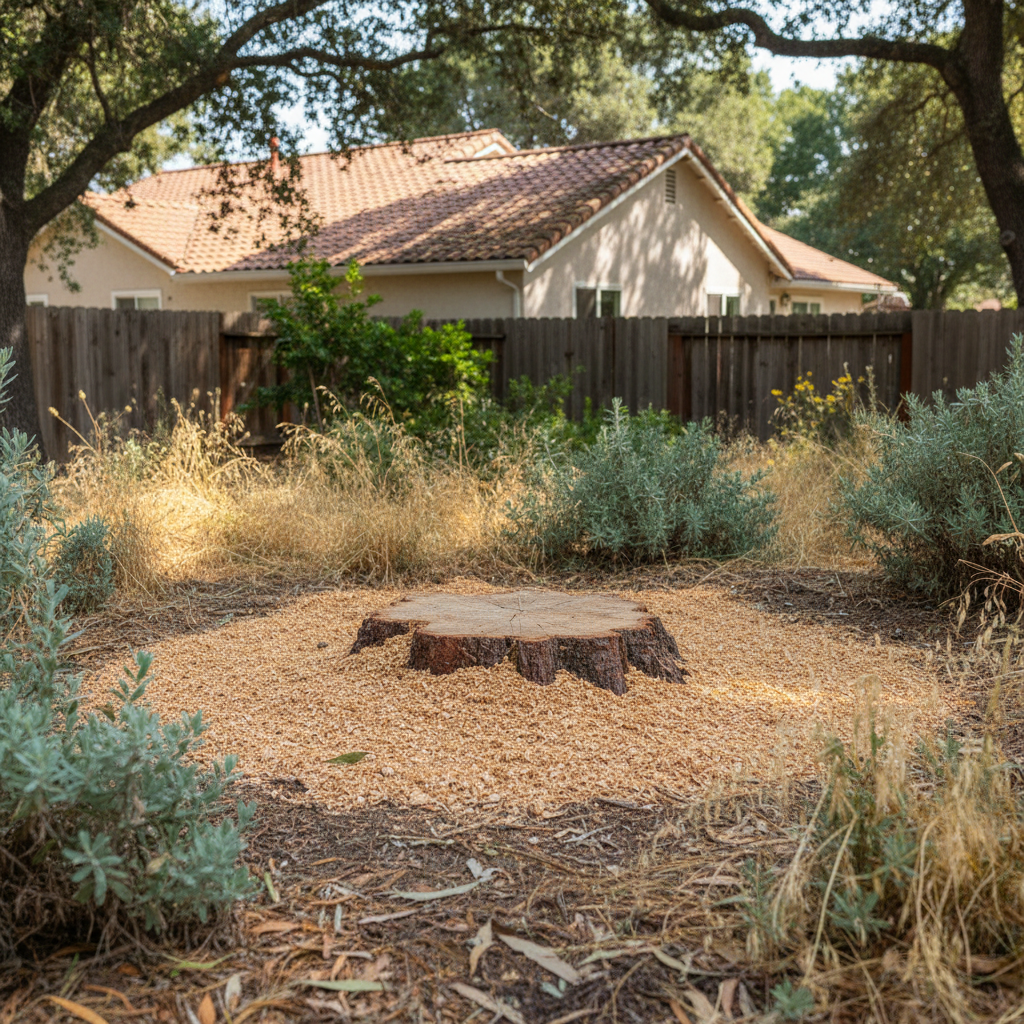
This is a common point of confusion. When we talk about 'tree removal,' we're generally talking about taking down the tree itself – cutting it into sections and clearing away the trunk, branches, and leaves. What's left is the stump, usually a few inches to a foot or two above ground level.
'Stump grinding,' on the other hand, is a separate service. It involves using a specialized machine with a rotating cutting head to grind the stump down into wood chips, usually 6 to 18 inches below ground level. This lets you plant grass, lay concrete, or do whatever you want with that space without a tripping hazard or an eyesore. If you don't grind it, the stump will slowly rot over many years, and it can become a home for pests like termites or carpenter ants, which you definitely don't want near your home here in the Bay Area.
Can I just cut down the tree myself?
Look, I get it. You're handy, you've got a chainsaw, and you want to save some money. But honestly, for anything more than a very small, easily accessible sapling, tree removal is incredibly dangerous work. It's not just about cutting the trunk. You're dealing with immense weight, unpredictable falling branches, power lines, property damage risks, and serious personal injury potential. I've seen too many DIY attempts go wrong, resulting in damaged roofs, smashed fences, and trips to the emergency room.
Professional arborists have specialized equipment, training, and insurance for a reason. We know how to assess a tree's fall direction, use ropes and rigging safely, and work around hazards. Unless it's a tiny tree that poses zero risk, I strongly recommend leaving it to the pros.
When is the best time of year to remove a tree?
Unlike pruning, which has ideal seasons for tree health, tree removal can generally happen any time of year. However, there are a few considerations:
- Winter: When deciduous trees have lost their leaves, it can be easier to see the branching structure and plan the removal. The ground might also be firmer if we've had a dry spell, making it easier for heavy equipment.
- Spring/Summer: Trees are in full leaf, which means more weight and more debris to haul away. Also, if there are nesting birds, we'll need to be mindful of that.
- After a storm: If a tree is damaged and posing an immediate hazard, it needs to come down regardless of the season. Emergency removals are a different beast.
For most removals, the 'best' time is simply when it's convenient for you and when the weather allows for safe work. We're pretty lucky here in San Lorenzo with our mild climate, so we don't often get snow or extreme cold stopping us.
What happens to the wood after you remove the tree?
Typically, when we quote a tree removal job, it includes hauling away all the wood, branches, and debris. We chip the smaller branches on-site and take the larger wood sections to a facility for recycling. Sometimes, homeowners want to keep some of the wood for firewood or for a woodworking project, and we can usually accommodate that. Just let us know upfront so we can adjust the plan and the quote.
We aim for a clean site when we're done. You won't be left with a mess, just the space where the tree used to be.